It is neither a client nor a product for sale. It is the answer to a question that sometimes comes up in a first meeting: do you actually build, or do you just coordinate someone else?
Where the idea came from
From the work in hospitality. An independent hotel pays commission on every booking that comes through an online agency, and checking one by one whether the charge is correct is work nobody does: hundreds of line items a month, and the window to dispute expires.
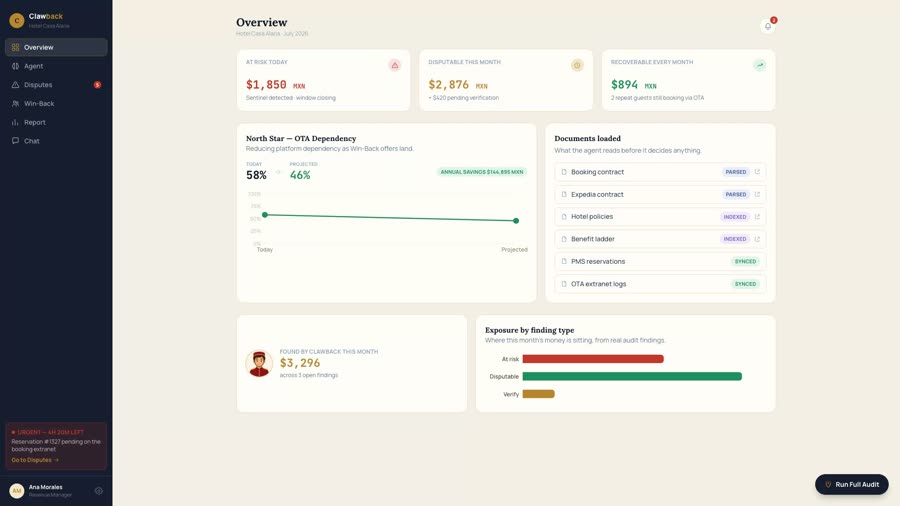
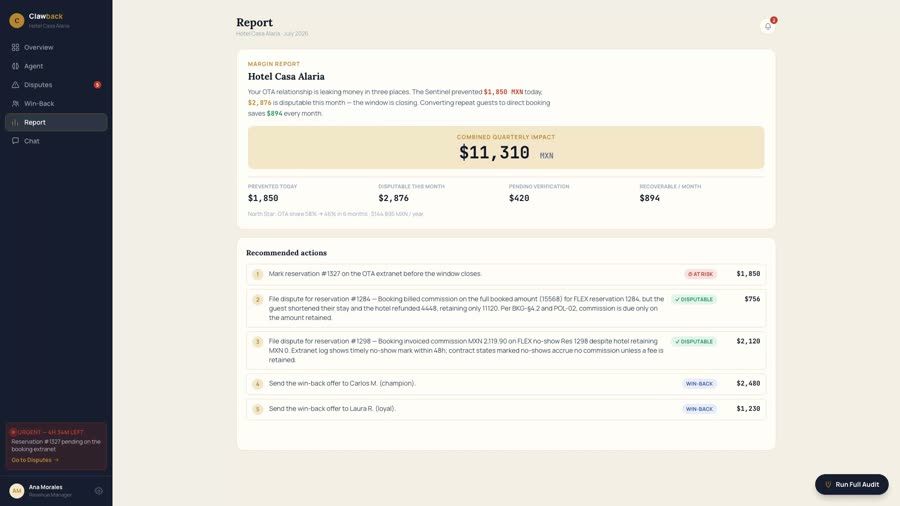
Clawback audits that charge. It checks what the agency invoices against what actually happened and flags what does not add up, while there is still time to dispute it.
Why the diagnostic comes first here too
What it does
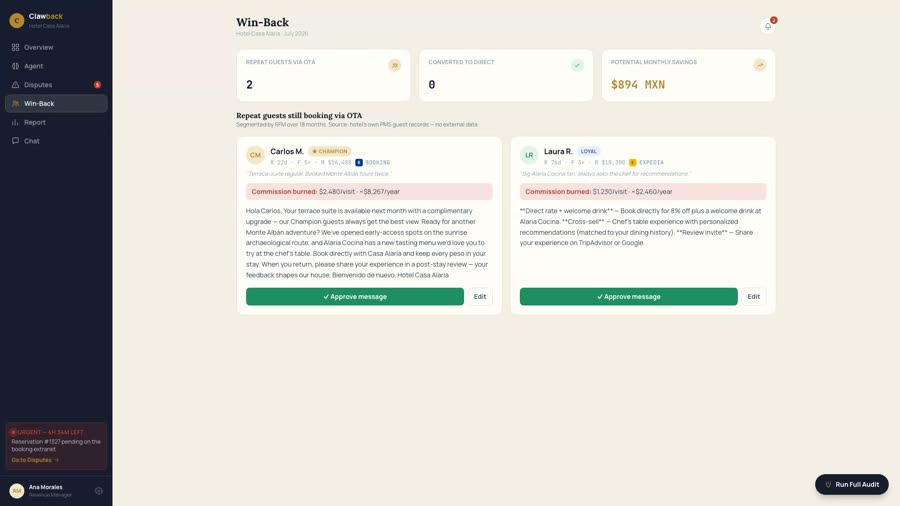
It reviews the entire relationship with the agency and finds money leaking two ways. The first is wrongly charged commission: guests who never arrived, stays that were shortened, incorrect rates. The second is quieter — commission paid on guests who are already repeat customers and keep booking through the agency instead of direct.
Every finding is backed by the document that supports it, with its confidence level. And when the manager corrects the agent, that correction becomes a rule for every audit that follows.
One detail was deliberate: the agent also flags when there is nothing to dispute. A non-refundable rate where the hotel kept the payment produces a correct commission, and saying so matters as much as catching the error.
Demonstration of the agent, recorded during the hackathon.
What it proves
It was built in the hospitality track sponsored by Vultr, against teams from around the world, in forty-eight hours and competing remotely from Oaxaca. We did not win. What remained was proof that the team goes from spotting a problem to having something deployed and running, without a safety net.
How it is built inside is not published. What can be seen is what it does.
Team: Rodolfo Navarro, Ariadna Ramírez and Eyeris Brehista Sánchez · RAISE Summit Hackathon 2026 · July 4–5 · remote participation.